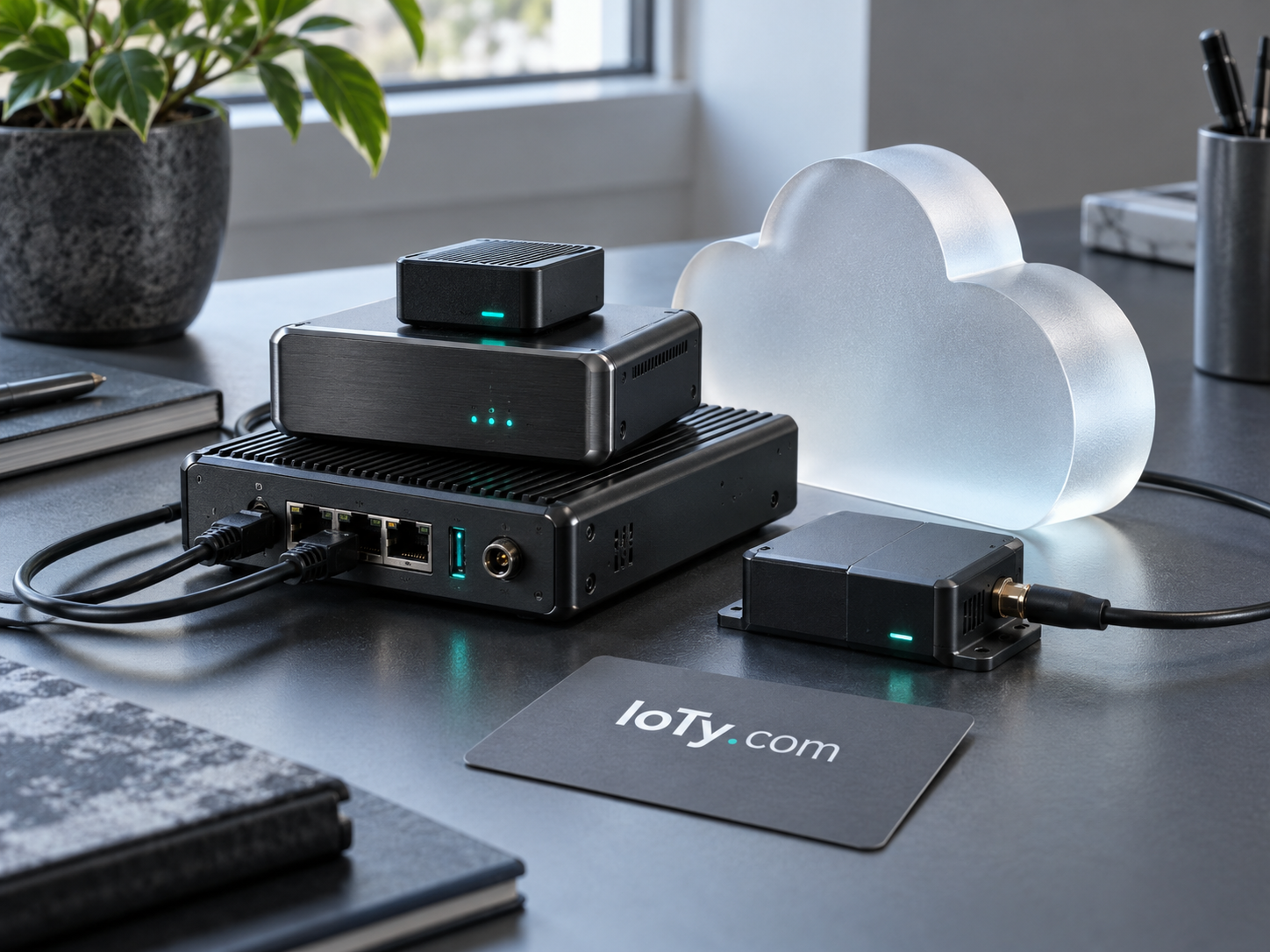
A connected product needs somewhere to live after it leaves the workbench. Its team needs to know which unit belongs to which customer, how it was configured, and what happens when the connection drops. IoTy.com could be the public name for a device-cloud platform built around that everyday work. The category signal is useful here: a prospective customer can place the product in the Internet of Things before reading a feature list.
This is an illustrative business concept. A sensible first audience would be small hardware teams that already have working devices and need a repeatable way to bring customer units online. Those teams may have stitched together a broker, a database, and a support spreadsheet. The first offer should solve one painful handoff between those pieces, with a scope a buyer can actually evaluate.
Start with the first customer device
Consider a company making environmental sensors for commercial buildings. Its engineering prototype sends readings successfully, but each new installation still needs a developer to create credentials and label devices manually. A focused opening product could handle the journey from an unassigned serial number to a device attached to the correct customer account. The product demonstration would follow that journey from beginning to end.
The first screen might ask an installer to claim a unit using a short code. The next step would identify the building and room. An operator could then see the most recent contact time and the configuration version. These are proposed workflows, not claims about an existing IoTy service. Their purpose is to make the opportunity concrete enough for a founder to judge.
Keep the boundary understandable
A platform becomes difficult to describe when every possible capability lands in the first release. Decide who owns the hardware identity, where messages enter the system, and which customer application consumes them. A team that already runs a broker might want only provisioning and support tools. Another might need a hosted connection endpoint. Those are different offers with different operational responsibilities.
The OASIS MQTT specification is a useful reference when defining message transport behavior. MQTT provides publish and subscribe messaging; choosing it does not settle account permissions, billing, or the meaning of a reading. A product brief should make those application decisions explicit rather than treating a protocol logo as an explanation of the whole service.
Build a supportable first offer
A launch package could include one supported device family, a documented onboarding flow, an operator view, and a way to export the device inventory. State what the customer must supply: compatible firmware, network access, an account owner, and someone authorized to approve configuration changes. A bounded offer helps both sides see where an evaluation begins and ends.
Support needs a place in the architecture from the start. If a unit appears offline, a service representative should be able to distinguish an old reading from an empty reading. If an installer claims the wrong unit, the reassignment path should be deliberate and visible. Record which actions change ownership and which only change labels. Those distinctions are easy to miss in a polished demo and expensive to improvise during a customer call.
Reach builders through a useful integration
One credible distribution path is a detailed integration guide for a single hardware ecosystem. Show the parts required, the expected output, the failure states, and the cleanup procedure. A guide that ends with a customer-owned device in a test account offers a more useful introduction than a broad promise to connect everything. Partnering with a specialist integrator could put that guide in front of teams already doing installation work.
The public website would have separate routes for the engineer evaluating compatibility and the operator checking support arrangements. Both should see the same product boundary. Documentation can show the request and response; the product page can explain whose task becomes easier. Neither needs to imply that a demonstration proves production reliability.
Plan for the awkward lifecycle events
Device ownership changes. Credentials expire. A customer replaces its network equipment. A unit is returned and later resold. Write down the intended behavior for those cases before adding another visualization. The NIST device cybersecurity capability baseline can help structure questions about identification, configuration, data protection, access, updates, and device state. It is a planning reference, not a certification attached to this concept.
Operational ownership matters just as much. Assign someone to review failed updates, define how customers receive service notices, and test an export that can be read outside the platform. Estimate infrastructure costs using a sample workload with known message sizes and retention periods. Keep measured results separate from projections. A buyer should be able to repeat the evaluation with its own hardware and agree on the evidence needed to proceed.
A name with room for the next device
IoTy.com can sit above the first supported device without tying the company to one sensor measurement. Product pages could expand by device family as compatibility is established. A concise public name also leaves room for plain navigation labels such as Devices, Documentation, and Support. The useful distinction would come from the product's scope and execution.
To explore the domain, bring a brief description of the intended platform, the customer it would serve, and whether the plan is an acquisition or a partnership. The inquiry can begin before every product decision is finished. Any agreement should clarify the domain transfer and separately confirm whether starter site assets are included.